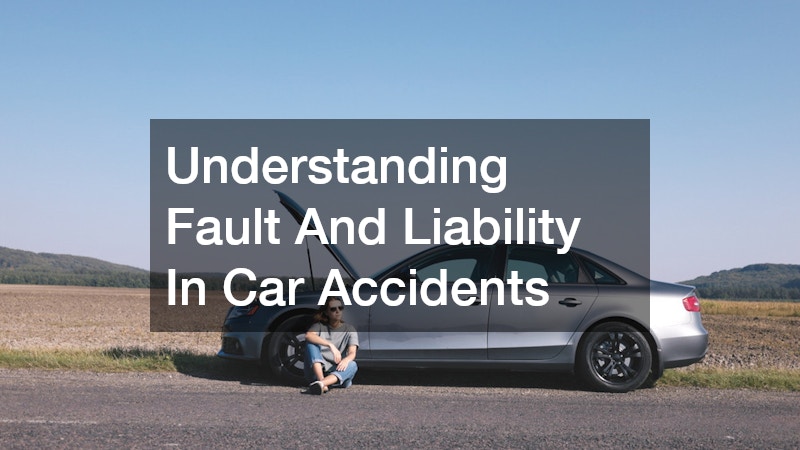
Understanding the key factors of fault and liability in car accidents can significantly impact the aftermath of any vehicular incident. This article aims to explore various angles and considerations necessary for a comprehensive understanding.
Determining fault often involves reviewing evidence such as police reports, witness statements, and physical damage. These elements help establish how the accident occurred and which party may be responsible. Clear documentation plays an important role in supporting claims and reducing disputes during the resolution process.
Liability can also be influenced by traffic laws and how they apply to the circumstances of the accident. Violations such as speeding, failure to yield, or distracted driving may shift responsibility from one driver to another. Understanding how these rules apply helps clarify potential outcomes.
Insurance coverage is another major factor when assessing fault and liability. Policy terms, coverage limits, and state-specific regulations all affect how claims are handled and how compensation is distributed. Reviewing policy details early can help manage expectations.
In some cases, fault may be shared between multiple parties. Comparative or contributory fault rules determine how responsibility is divided and how damages are calculated. These legal standards vary by jurisdiction and can influence the final resolution.
By gaining insight into fault and liability considerations, individuals are better prepared to navigate post-accident decisions. Knowledge of these factors supports clearer communication with insurers, legal professionals, and repair providers, leading to more informed and confident outcomes.
1. How Do Cracked Windshields Affect Liability?
Cracked windshields are not merely an aesthetic concern but a critical safety issue affecting the driver’s visibility. Cracked windshield auto glass companies play a crucial role in mitigating this risk by providing timely repair solutions. The liability often falls on the vehicle owner if an accident occurs due to neglecting windshield damage.
Cracks can originate from severe temperature fluctuations or debris impacts and may lead to structural integrity loss. By addressing windshield damage promptly, auto glass companies help prevent further complications or liabilities in the event of a crash. Insurance policies can sometimes cover these repairs, emphasizing the importance of regular vehicle maintenance.
Ignoring a damaged windshield could imply negligence, which influences liability in case of an accident. Laws in many jurisdictions mandate that drivers maintain a clear view, thus prioritizing regular inspections and repairs. Auto glass companies offer essential guidance and services to ensure compliance with safety regulations.
2. The Role of Auto Vehicle Parts in Determining Fault
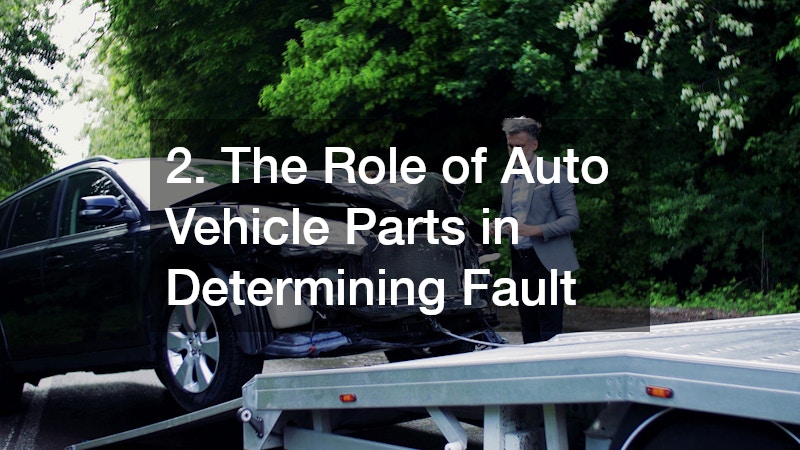
The malfunction of critical auto parts can be a significant factor in determining fault in vehicle accidents. Brake failure, tire blowouts, and faulty steering mechanisms are common causes of accidents involving defective components. Assessing the condition and maintenance of these parts is essential for establishing liability.
When investigating an accident, the evaluation of defective auto parts can reveal underlying negligence. Documentation and service records are vital in presenting evidence and defending claims. Manufacturers may also bear liability if faulty parts contributed to the incident, inviting legal actions against them.
Auto parts inspections pre- and post-accident help to detect issues early, preventing potential accidents. Regular maintenance checks will ensure the vehicle operates efficiently, reducing liability risks. These preventive measures are crucial for maintaining safety standards and minimizing unforeseen malfunctions.
3. Can Upholstery and Carpet Cleaning Impact Evidence Examination?
After an accident, maintaining and cleaning the car’s interior is essential, yet it may pose evidence integrity challenges. Upholstery cleaning can alter or remove physical evidence crucial for case investigations. Therefore, it’s vital to balance interior cleanliness with the preservation of potential evidentiary material.
Professionals in upholstery cleaning understand the importance of preserving evidence while still achieving a thorough clean. Techniques are employed to distinguish between necessary cleaning and tampering with potential evidence. The use of advanced cleaning solutions requires understanding the procedures approved by investigators.
The decision to clean post-accident should always involve consultation with legal counsel to avoid compromising evidence. Different jurisdictions have varying guidelines on evidence preservation during upholstery maintenance. Following recommended methods can support both cleanliness and legal compliance efficiently.
4. What is the Role of Car Cleaning Services Post-Accident?
Car detailing services offer a comprehensive clean-up that can help preserve evidence after accidents when approached correctly. By meticulously cleaning and preparing a vehicle, detailers can assist in safeguarding critical fibers or materials. Identifying the right service provider ensures that vehicle tampering claims are negated effectively.
Misinterpretation of cleaning services as tampering often arises, which requires clear documentation from detailing providers. Legal insights into how thorough cleaning aligns with evidence preservation must be transparent to avoid legal disputes. Detailers use protective measures to shield valuable pieces of evidence from degradation during cleaning.
Choosing the right car detailing service involves evaluating their professionalism and experience concerning accident-related services. Look for detailers familiar with the legal aspects of evidence preservation. Employing a reputable detailing service underscores a commitment to resolve any accidental claims precisely and thoroughly.
5. How Do Faulty Tanks Affect Liability?

Fuel tanks are an integral component whose defects could lead to catastrophic accidents. Faulty fuel tanks are usually identified by leaks, odors, or unexplained fuel consumption rates, posing significant safety risks. They require immediate correction to avoid extensive liabilities for vehicle owners and manufacturers.
Legal challenges arising from defective fuel tanks often involve complex litigation over product liability and manufacturing standards. Demonstrating that a defect led to an accident demands expert examination and thorough testing. Manufacturer accountability is crucial in these scenarios, as defective designs can pose widespread public safety risks.
Ensuring fuel tanks function correctly entails regular inspections and adherence to safety recalls. The role of manufacturers in facilitating corrective measures underlines their liability defenses against claims. Owners should also ensure compliance with safety advisories to protect passengers and third parties from potential accidents.
6. Hiring Attorneys for Accident Claims
Engaging local attorneys with expertise in vehicle accident claims is invaluable when navigating complex legal proceedings. These professionals bring crucial insights into local laws and climate, enhancing case outcomes. They tailor strategies based on local precedents and interpretations, which can substantially alter liability assignments.
Questions to ask potential attorneys include their experience handling similar cases, success rates, and client references. Ensuring they possess the capability to manage your specific legal needs builds trust and confidence. A solid understanding of automotive laws by your attorney aids in developing a robust claims process.
Assessing an attorney’s track record involves reviewing past case settlements and feedback from former clients. Local attorneys often leverage unique geographical insights, providing an edge in courtrooms familiar with regional drivers. Their involvement is pivotal in ensuring justice and fair compensation post-accident.
7. Understanding the Impact of a Gas System in Accidents

Gas blending systems influence vehicle performance by combining air and fuel in optimal ratios for efficient combustion. Malfunctions in these systems can cause driveability issues, impacting vehicle control and contributing to accidents. Examination of these systems during accidents is crucial for assessing liability related to vehicular failures.
Understanding how these systems fail involves investigating sensor errors, calibration issues, or component defectiveness. Evidence of regular maintenance and repair histories help clarify owner responsibility versus manufacturer faults. Legal repercussions follow when manufacturers neglect systemic safety, leading to dangerous driving conditions.
During accident investigations, the proper functioning of a gas blending system becomes pivotal in adjudicating fault. Technological advancements in diagnosis equipment have provided deeper insights into system operations. Evidence gathered can either relieve or impose further liability on parties, depending on failure analysis results.
8. Investigating Accidents with Used Tools
Utilizing used Ridgid tools or similar equipment in vehicular repairs requires scrutiny to ensure they do not compromise safety. Worn tools might affect repair quality, possibly leading to future accidents and complicating fault assessments. Ensuring tools are operationally sound before use prevents accidents due to equipment malfunction.
In liability cases, documentation regarding the condition and purchase history of used tools becomes significant. Any deviation from standard operational efficacy can suggest negligence or oversight from the user or repair shop. Liability also extends to sellers if they fail to disclose defects or misrepresent the tool’s condition.
Adopting stringent evaluation criteria for tools averts possible liabilities during repairs or post-accident investigations. Instituting proper procedures ensures tools maintain functionality without risking user or public safety. Such practices support safe operational standards, minimizing liabilities reflective of inadequate tool usage.
9. How Do Bail Bond Services Help Post-Accident?
Bail bonding services act as a financial lifeline post-accident, assisting individuals who face arrest due to their involvement. These services guarantee the accused’s court appearance, allowing them to manage their defenses effectively outside confinement. Bail bond agents play integral roles by facilitating the release process and guiding clients legally.
Understanding the terms and nuances of bail bonds becomes essential for defendants navigating post-accident legalities. Bail bonding enables individuals to continue personal obligations and arrangements during trial proceedings. Choosing responsive and professional bonding services mitigates stress and ensures compliance with legal obligations efficiently.
Selecting the right bail bond service demands a comprehensive review of potential agencies’ reputations, services, and client experiences. Evaluating an agent’s ability to provide prompt service and customer support is crucial for seamless legal transitions. The market demands professionals who can operate with discretion and offer ethical bonding solutions.
10. Bail Bonding Agent’s Assistance in Traffic Accidents
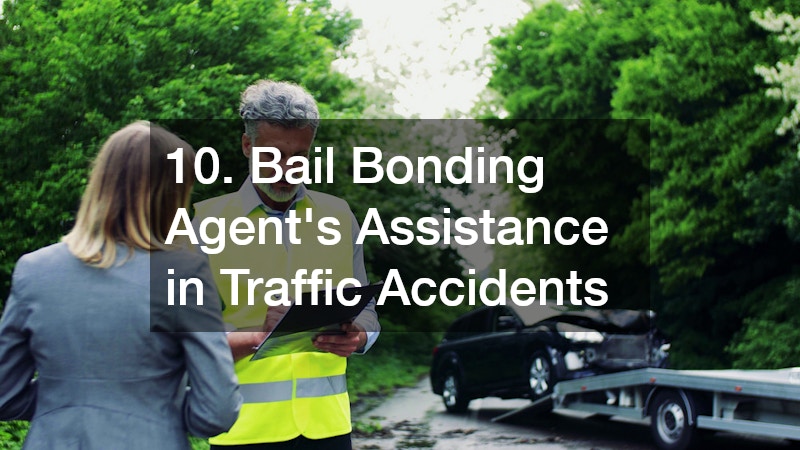
Traffic accident scenarios occasionally involve legal mandates requiring bail bonds, where agents become critical allies. Legal representation is facilitated through agents who guide the accused through initial legal procedures. Their expertise provides clients with immediate support and aligns them with competent legal resources.
Virtual assistance from bail bond agents offers swift, informed responses to arising legal challenges post-accident. This service allows apprehended individuals to maintain composure and understand obligations without being overwhelmed. Proactivity by agents results in diminished delays and navigational support aligning with legal processes.
Forming bail bond agreements necessitates adherence to specified documentation and procedural requirements. A comprehensible articulation of defendant responsibilities ensures clarity and adherence to court demands. Professional agents respect confidentiality while maintaining committed client representation within legal boundaries.
Bail bond agents also help clarify court timelines and appearance requirements following an accident-related charge. By explaining what to expect next, agents help individuals prepare for upcoming hearings and comply with legal obligations. This guidance reduces uncertainty during an already stressful period.
In addition, agents often act as a communication bridge between defendants, attorneys, and family members. Keeping all parties informed supports better coordination and reduces the risk of missed deadlines or misunderstandings. Clear communication is especially valuable when multiple legal steps follow a traffic-related incident.
Overall, the involvement of a bail bond agent can streamline early legal processes after a traffic accident. Their structured approach, attention to detail, and availability provide stability during uncertain circumstances. This support allows individuals to focus on resolving legal matters responsibly while addressing other post-accident concerns.
The intricate dynamics of fault and liability in car accidents require careful exploration of many facets, from auto parts, legal representation, to post-accident services. This comprehensive understanding aids in making informed decisions throughout the process. Awareness and responsive action towards these aspects empower individuals when dealing with vehicular incidents.
Vehicle condition and maintenance history can influence how fault and liability are assessed. Worn brakes, faulty lights, or other mechanical issues may contribute to an accident and affect responsibility determinations. Keeping records of maintenance and repairs can provide helpful context when questions arise.
Legal representation plays a significant role in clarifying rights and obligations after an accident. Understanding applicable laws, deadlines, and documentation requirements helps individuals respond appropriately. Professional guidance can also assist in interpreting how liability rules apply to specific circumstances.
Post-accident services, including towing, vehicle inspections, and repairs, contribute to a clearer understanding of damages. Detailed assessments from qualified professionals help establish the extent of loss and support accurate reporting. These services often form the foundation for insurance and legal discussions.
Communication between all involved parties is another important factor. Clear and timely exchanges with insurers, repair facilities, and service providers reduce misunderstandings. Organized records and consistent follow-ups help keep the process moving efficiently.
By approaching fault and liability with preparation and awareness, individuals can navigate the aftermath of an accident more confidently. Understanding how different elements interact supports better decision-making and promotes smoother resolution during a challenging time.
About the Author